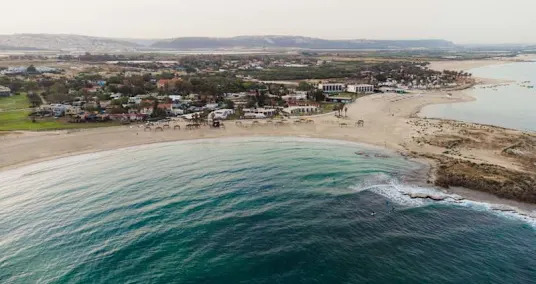
The discovery was made in an ancient shipwreck in the Dor Lagoon near the Carmel Coast, where archaeologists recovered nine pieces of unprocessed iron known as “blooms.”
Researchers from the University of Haifa said Wednesday that an underwater excavation off Israel’s northern Mediterranean coast uncovered what they described as the earliest known cargo of raw iron transported by ship, dating back around 2,600 years, Xinhua reported.
The discovery was made in an ancient shipwreck in the Dor Lagoon near the Carmel Coast, where archaeologists recovered nine pieces of unprocessed iron known as “blooms.” According to the university, the find provides direct evidence of how iron was transported in its earliest commercial stages.
The material was preserved in its original form, having solidified directly in a smelting furnace without undergoing forging or further refinement. Researchers said this distinguishes the cargo from later iron artifacts that typically show signs of shaping or tool-making.
Unlike copper and bronze, which could be melted into liquid form in ancient production processes, iron was heated with charcoal to produce a solid, porous mass. That mass was generally hammered to remove impurities and create denser material suitable for tools and implements.
The recovered blooms showed no indication of that secondary processing stage, suggesting they were transported immediately after production.

Earliest iron shipment discovered in ancient Mediterranean wreck
To determine the age and condition of the cargo, researchers conducted microscopic and chemical analyses.
Radiocarbon dating was also carried out on charred wood embedded in one of the pieces, helping confirm the timeline of the shipment. The findings were published in the journal Heritage Science.
Researchers said the cargo indicates that iron was being moved in raw form from production sites to other locations for further processing, pointing to a level of specialization in ancient manufacturing and trade networks in the Mediterranean.
The University of Haifa said the discovery provides new insight into early iron production and distribution practices in the region.
latest_posts
- 1
 Scientists detect X-ray glow from interstellar comet 3I/ATLAS extending 250,000 miles into space
 - 2Figure out How to Amplify the Resale Worth of Your Kona SUV
- 3Find the Abilities Required for Advanced Advertising Position
- 4Nuno Loureiro, MIT physicist, fatally shot at home; police investigate
- 5Dolly Parton misses Dollywood event due to 'a few health challenges' after skipping honorary Oscars


- Fake new headlights rule steer Australian drivers astray
- Danish warship sunk by famed British admiral discovered after 225 years
- What did the gov’t approve for Israel’s 2026 state budget?
- Comet C/2025 K1 (ATLAS) breaks apart in incredible telescope photos
- Protester climbs on to balcony of Iranian embassy in London
- Jillian Michaels put me at the center of a body positivity debate. She's not entirely wrong about obesity.
- China's Normal Ponders: A Visual Excursion
- 'Unreal' solar eclipse: Artemis 2 crew just saw one of the rarest sights in spaceflight history
- Antivirus Programming for Exhaustive Security